
UK Basketball Futures Betting: Lock in High Championship Odds
 Available in US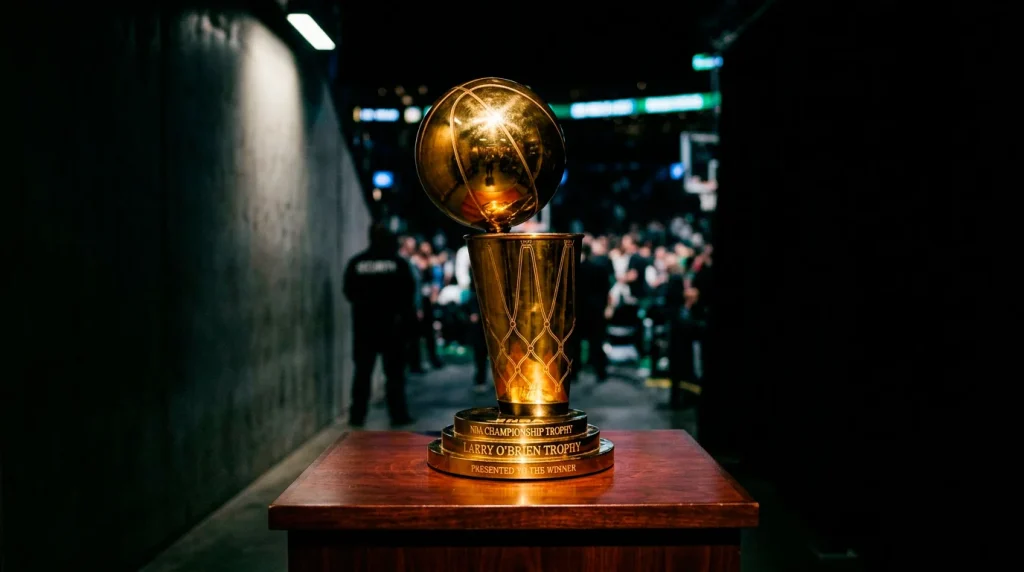
In October 2023, I placed a futures bet on a team to win the NBA Championship at 14/1. By February, they had the best record in the league and their price had shortened to 3/1. I could have cashed out for a guaranteed profit or let it ride through the playoffs. That decision — and the months of analysis that preceded it — captures what makes futures betting fundamentally different from game-by-game wagering. You are not predicting tonight’s result; you are predicting the shape of an entire season.
Futures Markets: Finding Value in Season-Long NBA Bets
The NBA Championship outright is the headline futures market, available from the moment the previous season ends and staying open throughout the following campaign until the Finals begin. Every major UK bookmaker prices all 30 NBA teams, with odds ranging from short favourites around 3/1 to long shots at 200/1 or more. The market is deep, liquid, and constantly repriced as the season unfolds.
Conference winner markets split the Championship race into Eastern and Western Conference outrights. These are popular because the playoff bracket separates conferences until the Finals, meaning your bet resolves one round earlier than the outright Championship. The odds are shorter but the probability is higher — a team needs to win three playoff rounds instead of four.
Division winner markets are available at most operators, though the liquidity is thinner. Regular-season win totals — over/under on a team’s total wins for the 82-game season — represent a different kind of futures bet entirely. Instead of predicting a champion, you are predicting a team’s overall quality relative to the bookmaker’s projection. Win totals typically open in August or September and close before the regular season begins.
Individual award futures cover MVP, Defensive Player of the Year, Rookie of the Year, Sixth Man of the Year, and Most Improved Player. The NBA generates approximately 60% of all global basketball betting revenue, and individual award markets are a growing slice of that handle as the public’s appetite for player-level narratives intensifies. MVP futures in particular attract heavy betting interest, with the market opening months before the season and repricing after every notable performance.
When to Place Futures Bets
Timing is everything in futures markets, and the optimal entry point depends on the type of bet and your analytical thesis. I have made my best futures returns by placing bets during windows when the market is slowest to react to new information.
Pre-season — June through September — is when Championship futures offer the longest odds and the most potential value, but also the most uncertainty. Off-season trades, free agent signings, and draft picks reshape rosters dramatically, and the bookmaker’s initial pricing reflects a pre-trade landscape that may be outdated within weeks. If you have a strong view on a specific team’s off-season moves and believe the market has not yet priced their improvement, pre-season is the time to act.
The first two weeks of the regular season create another window. Overreactions to small sample sizes are rampant — a team starts 1-4 and their Championship odds drift from 10/1 to 25/1, even though five games out of 82 are statistically meaningless. If your pre-season assessment still holds and the early results are noise rather than signal, the longer odds represent genuine value.
Mid-season, particularly around the trade deadline in February, produces the final significant repricing event. A blockbuster trade can transform a contender’s prospects overnight, and the futures market adjusts rapidly but not always accurately. The bookmaker reprices based on perceived impact; your edge comes from assessing actual impact — how the new player fits the system, what the chemistry adjustment period looks like, and whether the trade genuinely addresses the team’s weaknesses.
Pricing Dynamics and Finding Value
Futures prices embed several layers of margin that you need to understand before assessing value. The total implied probability across all 30 NBA teams for the Championship outright typically sums to 140% or more — meaning the bookmaker’s overround on futures is significantly higher than on game-level markets where total implied probability sits around 104 to 106%.
This higher margin means you need to find larger mispricings to achieve positive expected value. A team that you assess at a true 10% probability of winning the Championship needs to be priced at odds implying 7% or lower (roughly 14/1 or better) for the bet to have positive expected value after accounting for the bookmaker’s margin. The gap between your assessment and the implied probability needs to be wider for futures than for handicap or totals bets.
Public sentiment distorts futures prices more than any other market. The bookmaker is not just pricing probability; they are managing liability. If a popular team attracts disproportionate public money, the bookmaker shortens their odds regardless of whether the team’s actual probability has changed. Conversely, unfashionable teams or small-market franchises often carry inflated odds because they attract less public attention. The value in futures betting is almost always on the unfashionable side.
Managing Futures Through the Season
The longest I have held a futures bet without resolution is eleven months. That duration demands a different psychological approach than betting on tonight’s game. You are tying up capital, watching your bet’s value fluctuate with every injury report and trade rumour, and resisting the urge to cash out at the first sign of trouble.
Cash out is available for most basketball futures at UK bookmakers, and it creates a genuine strategic decision. If your 14/1 shot is now trading at 4/1 with two months of regular season remaining, cashing out locks in a guaranteed profit. Letting it ride gives you a higher potential return but risks the bet losing all value if the team suffers a key injury or playoff exit. There is no universally correct answer — it depends on your bankroll, your risk tolerance, and your updated assessment of the team’s true Championship probability.
I use a simple framework: if my updated probability assessment has not changed materially from when I placed the bet, I let it ride. If new information — a season-ending injury to a star player, a disastrous trade, a coaching change — has genuinely reduced the team’s chances below what the current odds imply, I cash out. The decision should be analytical, not emotional. A profitable cash-out that secures 3x your stake is a good outcome even if the team goes on to win the Championship at 14/1. Understanding how cash out works for basketball bets in detail is essential before you commit capital to any long-term futures position.
Articles
Written by the editors at CourtEdge.
