
UK Basketball Cash Out Rules: Securing Profit Settlements
 Available in US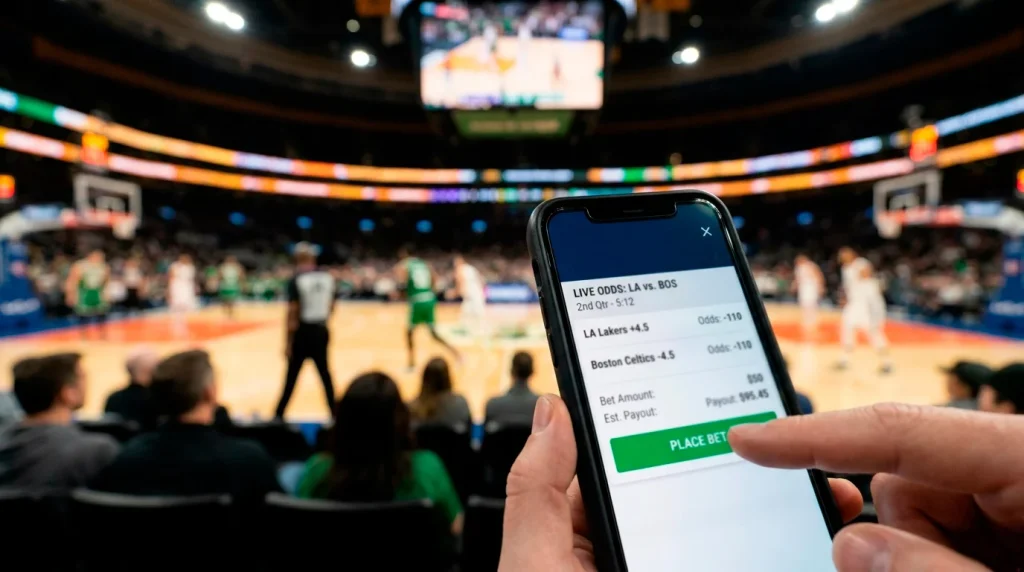
I once had a four-leg basketball accumulator where three legs had already won and the final game was in the third quarter with my team leading by 11. The cash-out offer was 78% of the maximum payout. I let it ride. The team blew the lead, lost by 3, and I collected nothing. That single decision cost me more than any bad analytical call I have ever made, and it permanently changed how I think about cash out as a strategic tool rather than a sign of weakness.
Cash Out Mechanics: Optimizing Payouts at UK Bookmakers
Cash out lets you settle a bet before the event is finished, locking in a return based on the current state of play. If your bet is winning, the cash-out offer will be above your original stake — you take a guaranteed profit in exchange for giving up the potential maximum payout. If your bet is losing, the cash-out offer will be below your stake — you recover a portion rather than losing everything.
The cash-out value is calculated in real time using the current odds. If you placed a pre-game handicap bet at 1.90 and the in-play odds on your selection have shortened to 1.30 because your team is winning comfortably, the cash-out value reflects the difference between your original odds and the current odds, minus the bookmaker’s margin on the transaction. That margin is typically 3 to 8% of the theoretical fair value — the bookmaker does not offer cash out at breakeven for themselves.
Not every bet offers cash out. The feature is most consistently available on pre-match singles and accumulators for major leagues like the NBA and EuroLeague. Lower-profile basketball leagues, player props, and certain specialty markets may not carry cash-out functionality. The availability can also change during the game — cash out is suspended during market stoppages (typically every time a basket is scored or play is stopped), and it may be withdrawn entirely during the final minutes of close games when volatility is highest.
Cash Out on Live Basketball Bets
Basketball’s scoring frequency makes the cash-out experience more dynamic than in slower sports like football. An NBA game averages a scoring event every 20 to 30 seconds, and each score changes the game state and the cash-out offer. The value fluctuates constantly, and the window to accept a specific offer is narrow — by the time you tap the button, a three-pointer at the other end may have already shifted the number.
Same-game parlays on basketball account for 38% of in-play bets, and cash out on these products is more complex. The correlated legs mean the cash-out model must account for the interdependencies between your selections. If one leg of your same-game parlay has already won (say, Team A scored over their team total) and the remaining legs are trending positively, the cash-out offer reflects the reduced uncertainty — but the correlation discount remains embedded in the price.
The timing of cash-out decisions in basketball is dictated by the game’s momentum structure. The most profitable moments to cash out winning bets are immediately after your side extends a run — the odds will be most favourable to you when your team’s in-game probability is highest. Waiting for “one more basket” often means waiting through the opponent’s inevitable response, which erodes the offer. Basketball is a game of runs, and recognising when your team’s run is peaking is as valuable for cash-out timing as it is for live betting entry points.
Partial Cash Out and Auto Cash Out
Several UK bookmakers offer partial cash out on basketball bets, which splits the difference between cashing out fully and letting the bet ride. You can cash out a percentage of your bet — say 50% — and leave the remaining stake active on the original terms. If the bet goes on to win, you collect the partial cash-out amount plus the winnings on the remaining stake. If it loses, you keep the partial cash-out profit and lose only the remaining portion.
Partial cash out is the compromise option I use most frequently on basketball accumulators. When three of four legs have won and the fourth is in progress with my selection ahead, I cash out 40 to 60% and let the rest ride. This guarantees a profit regardless of the outcome while preserving significant upside. The exact split depends on how comfortable I am with the game state — a 15-point lead in the fourth quarter merits a smaller cash-out percentage than a 4-point lead with six minutes remaining.
Auto cash out sets a target value at which the system automatically cashes out your bet without requiring manual intervention. If you place a bet and set an auto cash-out target of 50 pounds, the system will execute the cash out if and when the offer reaches that threshold. This is useful for NBA bets on late-night games where you will be asleep before the finish — you set your target, go to bed, and the system manages the exit. The risk is that the target is hit briefly during a momentum swing and the cash out executes at a moment when you might have preferred to hold.
When Cash Out Is the Wrong Decision
Cash out is not always the right move, and the bookmaker’s margin on the feature means using it habitually erodes your long-term returns. The margin the operator takes on each cash-out transaction is real money leaving your expected value, and if you cash out every winning bet early, you are voluntarily paying an extra tax on your profits.
The clearest case against cashing out is when your original analysis is still valid and the game state confirms it. If you bet the over at 219.5, the first-half combined score is 120, and the pace of the game has been exactly as you predicted, cashing out means you are paying a premium to exit a bet that your analysis says is going to win. The correct play is to let it ride and accept that variance might occasionally produce a second-half scoring drought that costs you the bet.
Cash out is most valuable when new information has changed the situation in ways your original bet did not account for. A key player injury during the game, a drastic change in pace or referee approach, or a tactical adjustment that undermines your thesis — these are legitimate reasons to reassess and exit. The question to ask is not “am I nervous?” but “has anything changed that my original analysis did not anticipate?” If the answer is no, the nerves are just variance anxiety, and cashing out is an emotional decision dressed up as a strategic one.
For understanding how the bets you are cashing out were constructed in the first place — including the settlement rules that apply if you do not cash out — the bet settlement rules guide covers the full framework.
Articles
Written by the editors at CourtEdge.
